The Best Time for Your Bali Photoshoot: A Golden Hour & Dry Season Calendar
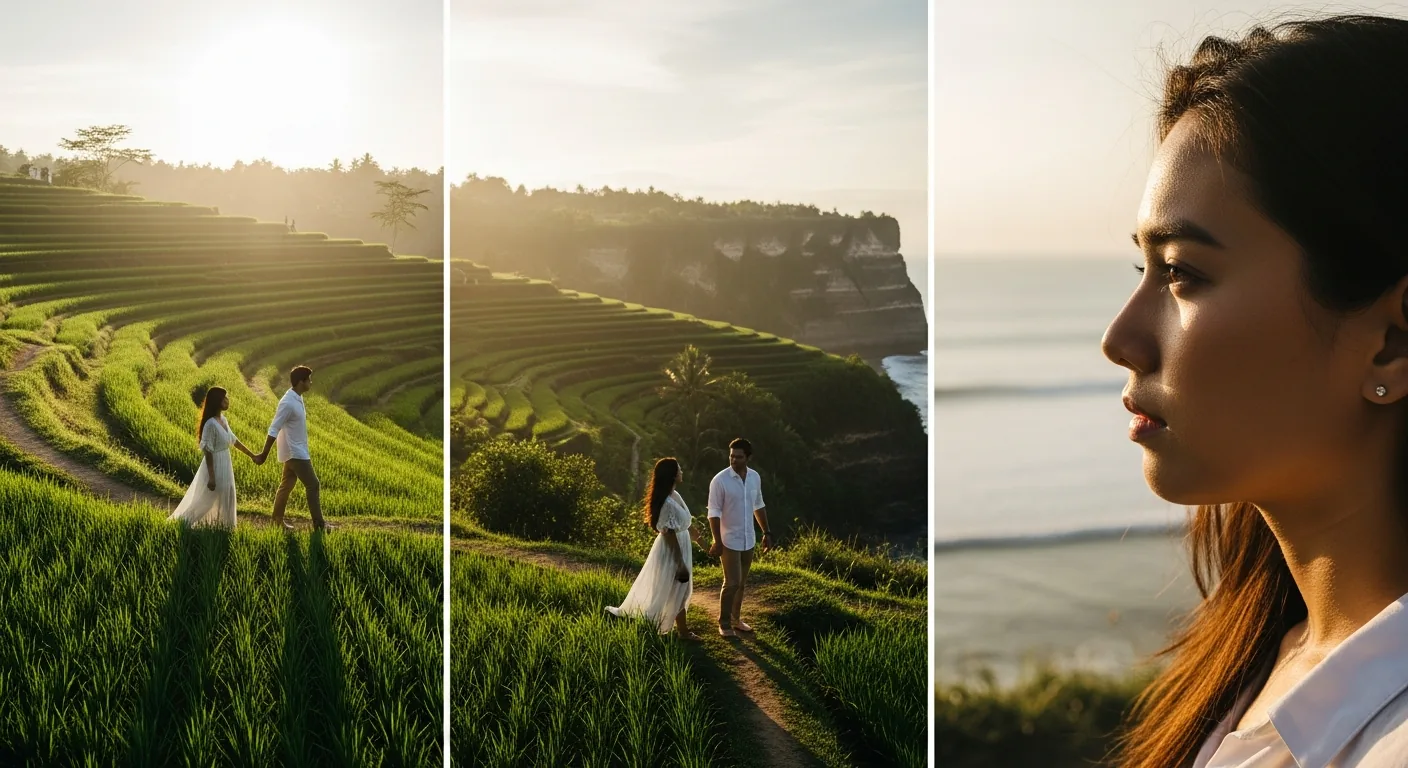
The air in Ubud is thick with the scent of frangipani and morning offerings. As the first light spills over the Campuhan Ridge, it catches the fine mist rising from the Wos River valley, turning the entire landscape a soft, ethereal gold. For the discerning traveler, this is more than a beautiful moment; it is a precise, fleeting window of opportunity. The difference between a simple holiday snapshot and a commissioned portrait that chronicles a significant life moment—be it a pre-wedding story or a family legacy—is often measured in these minutes. The quality of light, the cooperation of the weather, and the rhythm of the island itself are the invisible elements a professional photographer orchestrates. The primary question for anyone planning a bali couple photoshoot or family session is not just where, but precisely when.
Navigating Bali’s microclimates and solar patterns is essential for securing imagery with depth, clarity, and emotional resonance. A portrait session on the limestone cliffs of Uluwatu is an entirely different logistical exercise from a family photo series in the verdant rice paddies near Ubud. This guide provides a detailed framework, moving beyond generic advice to offer a strategic calendar for planning your professional bali photoshoot. We will examine the island’s two distinct seasons, decode the photographic science of the golden hour, and provide a location-specific analysis to ensure your investment results in a collection of exceptional images.
Understanding Bali’s Two Seasons: The Decisive Factor for Your Photoshoot
Bali’s climate, located just eight degrees south of the equator, does not follow the typical four-season cycle. Instead, the year is divided into two dominant periods: the dry season and the rainy season. This bifurcation is the single most important environmental factor for any bali pre-wedding shoot or outdoor portrait session. Selecting the right season is the foundation upon which all other planning—location, wardrobe, and time of day—is built.
The Dry Season (April – October)
This period is widely considered the most favorable for photography. From April through October, Bali experiences lower humidity, minimal rainfall, and an abundance of sunshine. The sky is often a clear, brilliant blue, providing a clean canvas for vibrant, light-filled portraits. August is statistically the driest month, receiving an average of only 45 millimeters of rain in Denpasar, a stark contrast to the wettest months. Temperatures remain consistent, typically ranging from 27°C to 32°C (80°F to 90°F), with cooling breezes common along the coast. This reliability is paramount for clients traveling specifically for a photoshoot, as it drastically reduces the chance of weather-related postponements. The consistent sunshine also makes scheduling for specific light conditions, like the coveted golden hour, a more predictable endeavor. The only significant consideration is that this period, particularly from June to August, is also Bali’s peak tourist season, which requires more strategic planning to avoid crowds at popular locations. See also: explore Contact.
The Rainy Season (November – March)
Characterized by higher humidity and frequent, intense downpours, the rainy season presents both challenges and unique opportunities. January is the peak, with rainfall averaging over 345 millimeters. Storms are often powerful but brief, typically occurring in the afternoon. For a bali family photo session, this can mean scheduling for the morning is a safer proposition. However, the photographic upside can be substantial. The landscape is at its most verdant and lush, with a saturated, deep green palette. The cloud cover acts as a massive softbox, diffusing the harsh equatorial sun and creating even, flattering light for portraits at any time of day. Sunsets during this season can be exceptionally dramatic, with clouds catching the light in spectacular fashion. There are fewer tourists, and a skilled bali portrait photographer can use the moody skies to create images with a powerful, atmospheric quality. This season is best suited for clients with flexible schedules who appreciate a more dramatic aesthetic and are willing to embrace the unpredictability of the elements.
The Photographer’s Secret: Mastering Bali’s Golden Hour
Across the globe, professional photographers structure their schedules around two specific periods each day: the golden hour. This is not an arbitrary preference but a technical decision based on the physics of light. The golden hour refers to the first hour of light after sunrise and the last hour of light before sunset. During these times, the sun is low in the sky, and its light must travel through a greater volume of the Earth’s atmosphere. This journey scatters the blue and violet wavelengths, allowing the warmer, softer orange, pink, and golden tones to dominate. See also: explore Home.
I Wayan Suta, a senior photographer at Bali Photoshoot with over 15 years of experience capturing portraits on the island, explains, “The midday sun in Bali is direct and harsh. It creates strong, unflattering shadows under the eyes and nose. During golden hour, the light is diffused and directional. It wraps around the subject, creating a gentle, three-dimensional look that is impossible to replicate artificially. The light’s color temperature drops to between 2000K and 3500K, giving skin tones a warm, healthy glow.” See also: book Pre Wedding Shoot Bali.
In Bali, these windows are remarkably consistent year-round:
- Morning Golden Hour: Approximately 6:15 AM to 7:15 AM. This is the time for serene, quiet scenes, often with mist in the valleys of Ubud or empty beaches in Seminyak.
- Evening Golden Hour: Approximately 5:45 PM to 6:45 PM. This is the classic time for sunset portraits over the ocean in Uluwatu or Canggu, yielding rich colors and dramatic silhouettes.
Planning a bali photoshoot to coincide with these times is non-negotiable for achieving a premium, editorial quality in your final images. It requires an early start or a carefully planned late afternoon, but the results are unequivocally superior.
Location-Specific Timing: A Curated Guide to Ubud, Uluwatu, and Seminyak
While the golden hour provides the best light, the optimal time for a photoshoot is also dictated by the geography and character of the specific location. A one-size-fits-all approach is ineffective in Bali. A successful bali couple photoshoot requires a schedule tailored to the chosen backdrop.
Ubud: The Dawn Session
The spiritual and cultural heart of Bali, Ubud’s most compelling feature is its terraced rice paddies and lush river valleys. The magic here happens at sunrise. A session at the Tegalalang Rice Terraces, for example, must begin by 6:30 AM. This early start allows a photographer to capture the iconic misty light filtering through the palm trees before the crowds arrive around 9:00 AM and the harsh sun burns off the atmosphere. The entrance donation of IDR 25,000 (approximately $1.70 USD) is a small price for such a scene. Other locations like the Campuhan Ridge Walk are also best at first light, offering solitude and soft, angled illumination that highlights the textures of the landscape.
Uluwatu: The Sunset Exclusive
The dramatic limestone cliffs of the Bukit Peninsula are oriented westward, making Uluwatu the definitive location for sunset photography. The golden hour here bathes the cliffs in a warm, amber light that is nothing short of spectacular. While the Uluwatu Temple is iconic, it becomes extremely crowded for the 6:00 PM Kecak dance, making intimate photography challenging. Instead, we recommend secluded beaches like Melasti or Nyang Nyang, or a private cliff-front villa. The session should be timed to begin around 4:30 PM, allowing for a variety of portraits in the soft afternoon light before building to the crescendo of the sunset itself, which occurs between 6:15 PM and 6:45 PM.
Seminyak: The Versatile Coast
Seminyak’s long, sandy beaches offer flexibility, but also require careful planning. For a classic bali pre-wedding shoot with an empty beach and serene atmosphere, a sunrise session is essential. The morning light on the west-facing coast is soft and indirect, creating a clean, bright aesthetic. Conversely, sunset provides the quintessential Bali beach shot with a vibrant, colorful sky. The challenge at sunset is the crowd. A skilled photographer will use creative angles and lens choices to isolate subjects from the hundreds of other beachgoers at places like Double Six Beach. For clients who prefer the energy of the sunset scene, this can be a vibrant backdrop; for those seeking intimacy, morning is the clear choice.
Location Timing Comparison
| Location | Optimal Time | Light Quality | Crowd Factor | Recommended For |
|---|---|---|---|---|
| Ubud (Tegalalang, Campuhan) | Sunrise (6:15 AM – 8:00 AM) | Soft, misty, atmospheric | Low (before 9 AM) | Lush landscapes, cultural portraits |
| Uluwatu (Cliffs, Beaches) | Sunset (4:30 PM – 6:45 PM) | Warm, golden, dramatic | High at public spots, low at private villas | Epic cliffside and ocean views |
| Seminyak (Beaches) | Sunrise or Sunset | Sunrise: Clean, soft. Sunset: Colorful, vibrant. | Sunrise: Very low. Sunset: Very high. | Classic beach portraits, lifestyle shoots |
Beyond the Sun: Planning for Tides and Balinese Ceremonies
Two other critical, often overlooked, factors can significantly impact your photoshoot: ocean tides and the island’s vibrant ceremonial calendar. For any beach location, particularly in Uluwatu, Canggu, or Nusa Dua, the tide chart is as important as the weather forecast. A high tide might render a specific cove or beach inaccessible, while a low tide can expose dramatic rock formations or create reflective pools of water. We utilize tide-tracking applications to schedule beach sessions precisely when the shoreline is at its most photogenic and accessible. A bali family photo session planned for a specific beach can be completely altered by an unexpectedly high tide.
Furthermore, Bali operates on a unique 210-day Pawukon calendar, which runs parallel to the Gregorian calendar. This results in a continuous cycle of temple festivals (odalan) and major island-wide ceremonies. Holidays like Galungan and Kuningan see the streets adorned with beautiful bamboo poles called ‘penjor’, which can provide a stunning cultural backdrop for a bali portrait photographer. However, these periods also bring increased traffic and potential road closures. The most significant date is Nyepi, the Balinese Day of Silence, which typically falls in March (the date for 2025 is March 29). On this day, the entire island shuts down—the airport closes, no one is allowed on the streets, and all activity ceases for 24 hours. It is imperative to schedule your travel and photoshoot around these important cultural dates.
A Month-by-Month Calendar for Your Bali Pre-Wedding Shoot
To provide a clear, actionable plan, here is a seasonal breakdown to help you select the ideal time for your session. This is particularly crucial for a bali pre-wedding shoot, which often requires significant advance planning.
- Peak Season (June – August): This is the driest, sunniest part of the year. The weather is near-perfect for photography. However, this is also the busiest and most expensive time. Flights and accommodations can see a price increase of 30-50%. You must book your preferred photographer and any exclusive venues 6-9 months in advance. Crowds at iconic locations will be at their peak, requiring very early morning starts.
- Shoulder Season (April, May, September, October): This is the period we most highly recommend. The weather is still excellent, with minimal rain and plenty of sun. The intense crowds of peak season have dissipated, offering more flexibility and intimacy at popular spots. The landscape remains lush from the recent rains. Availability for top-tier photographers is better, though booking 3-5 months in advance is still advised.
- Rainy Season (November – March): This season is for the adventurous and flexible client. Prices are lower, and the island is less crowded. The scenery is intensely green and vibrant. The photographic style leans towards dramatic, moody, and atmospheric due to cloud cover and dramatic skies. There is a tangible risk of sessions being rescheduled due to rain, making it less suitable for those on a tight travel schedule.
Curating Your Session: Sample Itineraries and Pricing
To illustrate how these elements come together, here are two sample itineraries curated by the Bali Photoshoot team. These are starting points, and every session is customized to the client’s vision and style. See also: Bali Photoshoot.
Itinerary 1: The Uluwatu Sunset Couple Photoshoot (4 Hours)
This session is designed to capture the epic, romantic grandeur of the Bukit Peninsula.
- 3:00 PM: Your photographer meets you at your private cliff-front villa for initial portraits, capturing relaxed, intimate moments with the Indian Ocean as a backdrop.
- 4:30 PM: A short drive to Melasti Beach. We use the pre-sunset light to create dramatic portraits against the immense limestone cliffs and turquoise water.
- 5:45 PM: As the sun begins to set, we focus on capturing silhouettes and vibrant sky scapes on the beach, culminating in a series of powerful, emotional images as the golden hour reaches its peak.
- Package Price: Starts at $650 USD.
Itinerary 2: The Ubud Dawn Family Photo Session (3 Hours)
This itinerary focuses on Bali’s cultural heartland and is ideal for a bali family photo collection.
- 6:00 AM: An early meet at the Tegalalang Rice Terraces to capture the family interacting in the soft, misty morning light before anyone else arrives.
- 7:30 AM: We proceed to a quieter, less-visited temple like Tirta Empul (for exterior shots) to incorporate elements of Balinese architecture and culture.
- 8:30 AM: The session concludes with relaxed, lifestyle portraits at a luxury resort, perhaps the Four Seasons Sayan, using its beautiful grounds as a final, elegant setting.
- Package Price: Starts at $550 USD.
The optimal time for your Bali photoshoot is a confluence of season, light, and location. By planning within the dry, shoulder months of April, May, or September, and by structuring your day around the non-negotiable magic of the golden hour, you create the ideal conditions for exceptional photography. Whether it’s the dawn mists of Ubud or the fiery sunset over Uluwatu’s cliffs, timing is the invisible element that elevates a portrait from a picture to a piece of art.
To begin planning your session and secure the best dates, we invite you to consult with our coordination team. We can provide detailed availability and tailor an itinerary that perfectly aligns with your vision for a timeless Bali portrait collection.
Contact Bali Photoshoot:
- Phone: +62 811 2859 0000
- Email: [email protected]
- Office: Jalan Sunset Road No. 88, Kuta, Badung, Bali 80361